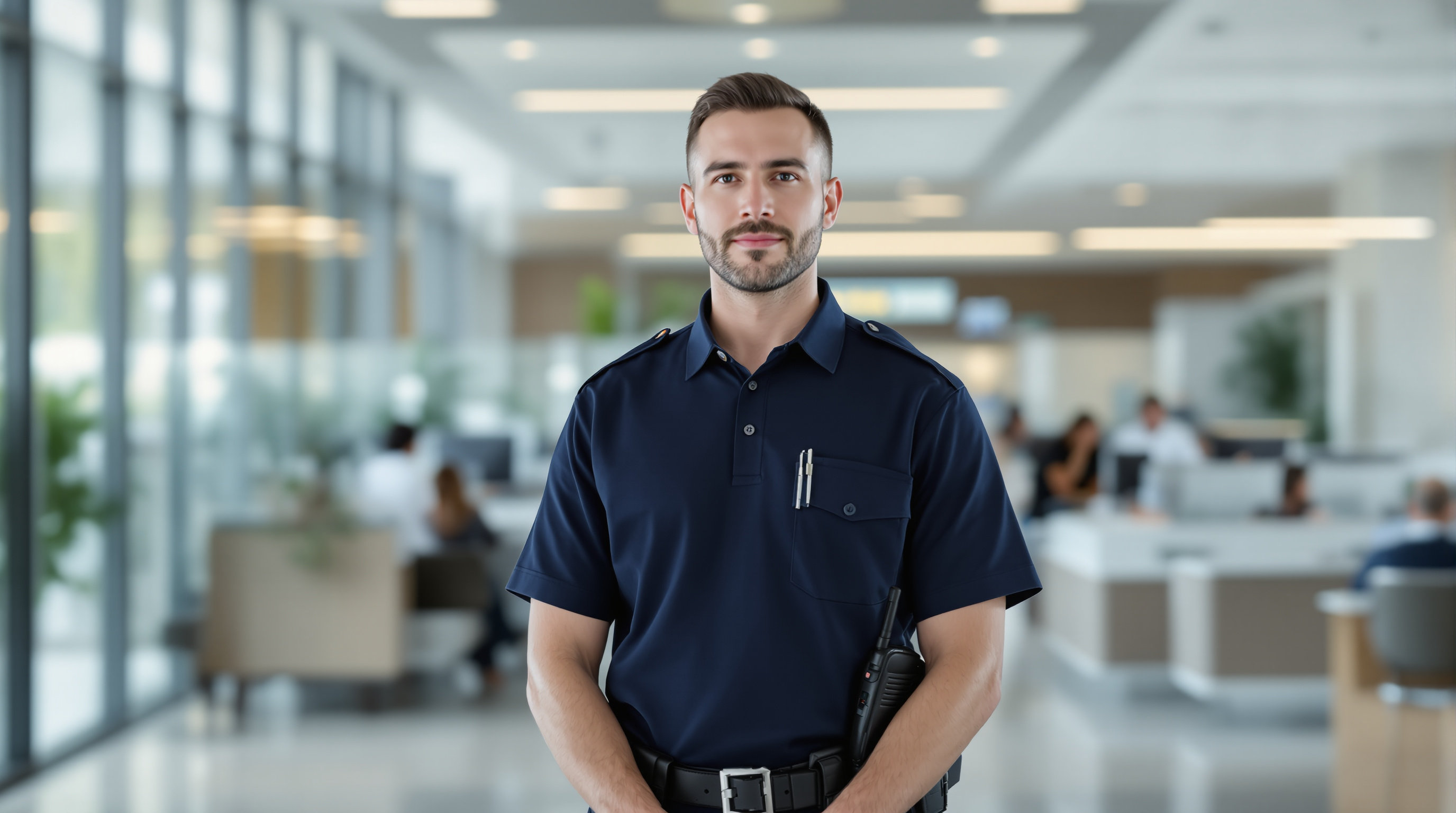
A patient in a Torrance urgent care starts threatening staff after a long wait. A visitor at a Pasadena medical office refuses to leave the lobby. A night-shift worker at a hospital near Downtown LA finds someone sleeping in the stairwell. Three different facilities, three different situations, and in all three cases, the front desk staff is looking around for someone who knows what to do.
Healthcare facilities face security challenges that most commercial properties never see. You are dealing with patients in pain, families under stress, controlled substances on-site, HIPAA-regulated spaces, and buildings that stay open around the clock. A guard who is used to watching a warehouse loading dock is not prepared for what walks through the doors of a medical facility.
Scaife Protection (PPO-12958) has provided healthcare security across Los Angeles for over 27 years. We have placed guards at hospitals, outpatient clinics, surgical centers, urgent care facilities, behavioral health offices, and medical office buildings from the South Bay to the San Gabriel Valley. Here is what we have learned about what healthcare facilities actually need from a security provider.
What This Page Covers
- Why healthcare security is different from standard guard work
- Types of healthcare facilities we secure across Los Angeles
- What healthcare security guards actually do day to day
- How to evaluate a healthcare security provider
- Healthcare security cost ranges in Los Angeles County
- Frequently asked questions about medical facility security
Why Healthcare Security Is Different
Security in a healthcare setting is not the same as security anywhere else. The rules are different. The risks are different. The people you are interacting with are different.
Patient and Visitor Behavior
Most security work involves keeping unauthorized people out. Healthcare security involves managing authorized people who are behaving in ways that create risk. Patients dealing with pain, medication side effects, or mental health crises can become aggressive without warning. Family members waiting for bad news sometimes direct their fear and frustration at the nearest staff member.
Your guards need training in verbal de-escalation, not just physical presence. A guard who escalates a situation with an agitated patient creates a liability problem. A guard who calmly redirects that same patient protects your staff, your other patients, and your facility's reputation.
Regulatory Requirements
Healthcare facilities operate under regulations that do not apply to other commercial properties. HIPAA restricts who can access patient areas and records. Joint Commission standards (for accredited hospitals) include security-related requirements. California's Health and Safety Code has specific provisions about security in healthcare settings.
Your security provider needs to understand these rules, or at minimum, follow the protocols your compliance team puts in place. That means custom post orders written specifically for your facility, not a generic template copied from the last warehouse job.
Access Control Complexity
A warehouse has a gate and a loading dock. A healthcare facility has emergency department entrances that must stay accessible 24/7, staff-only areas containing medications, patient rooms that need privacy, visitor access that changes depending on the hour, and delivery entrances for medical supplies and pharmaceuticals.
Managing all of those access points requires guards who understand the flow of a medical facility. Who gets in where, at what time, under what circumstances. Post orders for healthcare sites are some of the most detailed we write, because the margin for error is smaller.
Controlled Substances
Hospitals and clinics store medications that have significant street value. Opioids, benzodiazepines, stimulants. Theft of controlled substances is a real and recurring problem in healthcare, and it comes from both external break-ins and internal diversion.
Security guards in healthcare settings need to understand medication storage protocols, monitor pharmacy and medication room access points, and report irregularities. This is not about turning guards into pharmacists. It is about making sure the people responsible for your medication inventory have an extra set of trained eyes backing them up.
Types of Healthcare Facilities We Secure
Different healthcare settings create different security needs. Here is how the requirements break down across the types of facilities we serve in Los Angeles.
Hospitals and Medical Centers
Hospitals are the most complex healthcare security environment. Multiple entrances, 24/7 operations, emergency departments with unpredictable patient flow, behavioral health units, pharmacy operations, parking structures, and dozens of departments spread across multiple floors or buildings.
Hospital security typically requires 24-hour coverage with multiple guard posts. Emergency department entrances need dedicated coverage during peak hours. Behavioral health units often require guards trained in crisis intervention. Loading docks and pharmacy supply areas need controlled access monitoring.
Outpatient Clinics and Surgical Centers
Outpatient facilities have more predictable hours but face many of the same patient behavior challenges as hospitals. Surgical centers manage controlled substances and require strict access control during operating hours. Clinics in high-traffic areas deal with walk-in visitors, parking lot incidents, and the occasional patient who does not take well to a bill they were not expecting.
For most outpatient facilities, unarmed security during business hours covers the core risk. Some add evening coverage during extended-hour clinics or when staff is working late.
Medical Office Buildings
Multi-tenant medical office buildings present a unique challenge. You have multiple practices sharing common areas, lobbies, elevators, and parking. Each tenant may have different security needs, but the building owner is responsible for the shared spaces.
Lobby security with visitor management is the most common service for medical office buildings. Guards check in visitors, monitor common areas, and respond to incidents across multiple tenant suites. The key is coordination with each tenant's staff so everyone knows the protocol when something goes wrong.
Behavioral Health and Substance Treatment Facilities
These are the highest-risk healthcare environments for security incidents. Patients in psychiatric crisis, individuals going through withdrawal, and court-ordered patients who do not want to be there. Guards working in behavioral health need specific de-escalation training and a temperament suited to high-stress, high-emotion situations.
We do not place just any guard at a behavioral health facility. These assignments go to experienced guards who understand the difference between a patient having a crisis and a genuine security threat. Getting that distinction wrong can cause real harm.
Urgent Care and Walk-In Clinics
Urgent care facilities see high patient volume with minimal screening. Anyone can walk in. Wait times create frustration. Patients who were turned away from emergency departments or cannot afford hospital visits sometimes bring problems that go beyond what the front desk can handle.
Guard presence at the front lobby during peak hours is the most common request. In higher-risk neighborhoods, some urgent care operators add parking lot patrols during evening hours.
What Healthcare Security Guards Actually Do
Posting a guard at the front door is not healthcare security. Here is what the day-to-day work looks like at a properly secured healthcare facility.

Visitor Management and Screening
Every person entering the facility gets checked. That does not mean interrogating grandma when she visits her doctor. It means maintaining a professional greeting point where visitors check in, receive direction, and are routed to the right area. Guards know who belongs where and at what times. Unauthorized visitors get redirected politely. People who refuse to leave get handled by someone trained to manage that conversation.
De-Escalation and Crisis Response
This is the skill that separates healthcare security from every other type. Your guards will face agitated patients, grieving family members, and occasionally someone under the influence of substances. The first tool is always verbal de-escalation, using calm, direct communication to bring the situation down before it becomes physical.
California law limits what security guards can do in terms of physical intervention. Your guards should know those limits cold. When a situation exceeds what security can handle, the protocol is to contain, document, and call law enforcement. Not play hero.
Access Control and Patrol
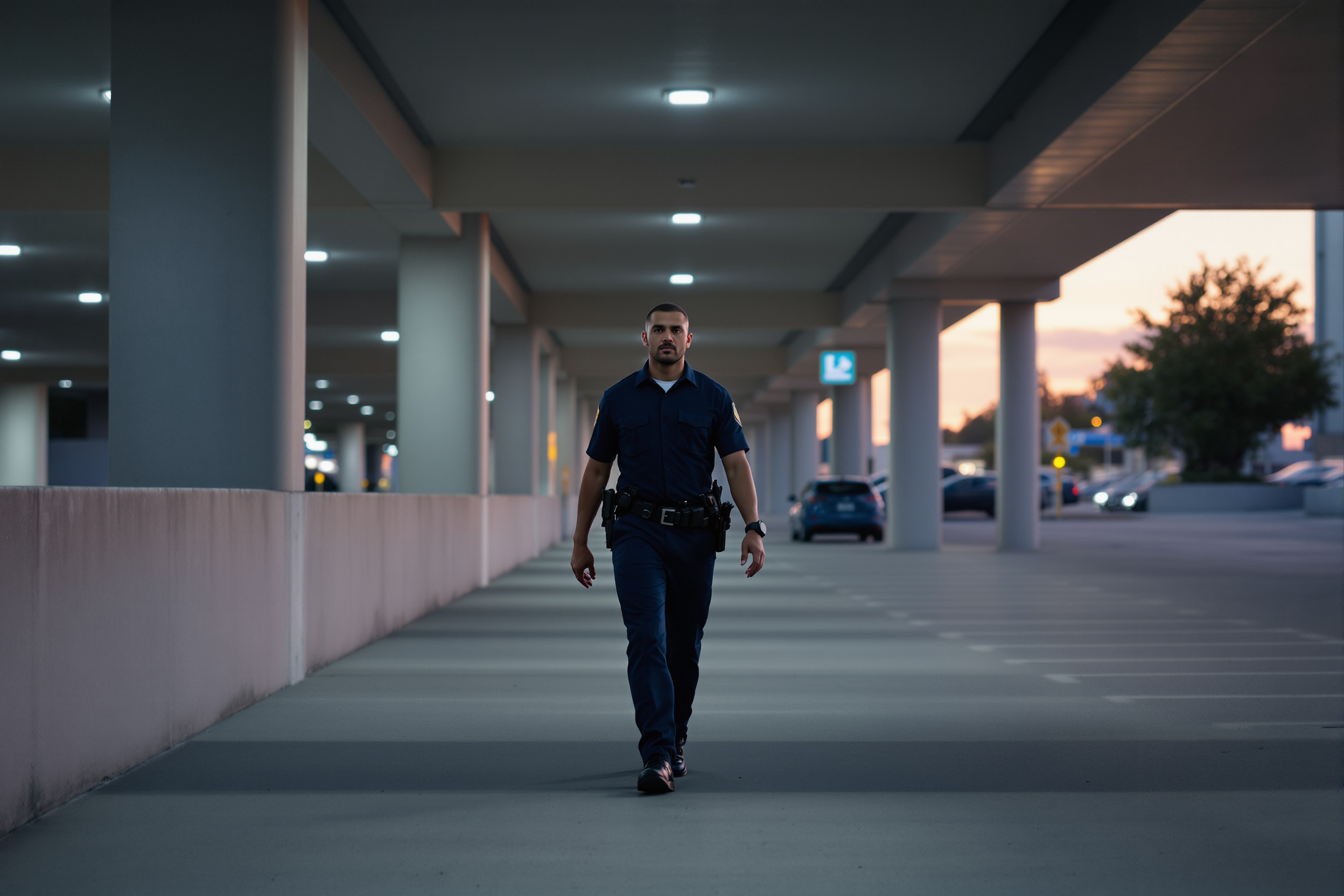
Regular patrols cover every floor, every stairwell, every parking level. Guards check locked doors, monitor camera feeds, and make sure restricted areas stay restricted. During night shifts, patrols become even more important. Hospitals at 3 a.m. are targets for theft, trespassing, and unauthorized access to patient areas.
Access control also means managing staff credentials. When an employee badge does not work or someone claims to be a vendor without proper ID, your guard makes the call. The right answer is always to verify first and grant access second.
Parking Lot Security
Healthcare parking lots are high-incident areas. Patients leaving with mobility issues, visitors distracted by stress, vehicles left unattended during long appointments or stays. Parking lot patrols deter vehicle break-ins, provide escort assistance for staff during shift changes, and serve as the first point of contact for anyone approaching the building.
For facilities in neighborhoods where parking lot safety is a specific concern (and in Los Angeles, that covers a lot of ground), dedicated parking coverage during evening hours makes a measurable difference.
Emergency Preparedness
Active shooter drills, fire evacuation support, earthquake response. Healthcare facilities have emergency plans, and security guards play a role in executing them. Guards should know the facility's emergency procedures, evacuation routes, and their specific responsibilities during each type of event.
We include emergency protocol training as part of the post order setup for every healthcare client. Your guards do not just know where the exits are. They know who to contact, what areas to clear first, and where the assembly points are.
What to Look For in a Healthcare Security Provider
Not every security company is equipped for healthcare work. Here is how to evaluate whether a provider can handle what your facility needs.
Healthcare-Specific Experience
Ask how many healthcare facilities they currently serve. Ask for references from medical facilities, not just commercial properties. A company that guards warehouses and retail stores may not understand HIPAA, de-escalation, or the unique access control requirements of a medical building.
Custom Post Orders
If a security company cannot show you a sample post order or explain how they will customize protocols for your facility, that is a red flag. Healthcare sites need detailed, facility-specific instructions that account for your patient population, your layout, your hours, and your regulatory requirements.
Guard Selection and Training
Healthcare assignments need guards with the right temperament. Patient-facing roles require people who are calm under pressure, professional in appearance, and capable of communicating with people in distress. Ask about guard screening and whether the provider matches specific guards to healthcare clients.
Insurance and Licensing
This applies to any security hire, but it matters more in healthcare where liability exposure is higher. Verify the provider's PPO license with the California Bureau of Security and Investigative Services (BSIS). Confirm they carry general liability insurance ($1 million minimum) and workers' compensation. Request certificates before the first guard starts.
Our license is PPO-12958. You can look it up right now. We carry over $1 million in liability coverage and full workers' comp for every guard we place. We provide documentation before we deploy, because that is what a professional security company does. If your current provider cannot match that, you should know why.
Responsiveness
Healthcare emergencies do not wait for business hours. If a guard calls out sick at 5 a.m. before a hospital shift, your provider needs to fill that post fast. Ask about their fill rate for callouts and how quickly they can deploy replacement guards.
Scaife Protection offers same-day deployment when you need it. Call Omar directly at (323) 786-8140. We deploy first, then do the site walk and build the custom post orders that keep your facility protected long-term. Start fast, then get it right.
Healthcare Security Costs in Los Angeles
Healthcare security typically costs more than standard commercial security because the skill requirements are higher.
About these rates
The ranges below reflect long-term contracts of 180 days or longer. On a long-term engagement, we can dedicate guards to your facility, build custom post orders for your site, and amortize hiring and training across the contract.
For short-term work (events, evictions, one-off shifts, or contracts under 180 days), expect higher rates and a 4-hour minimum. Short-term contracts carry premiums tied to the staffing economics involved.
Every facility is different. We will specialize a quote to your actual timeline, post count, shifts, and schedule. Request a quote or call (323) 786-8140 to get a number tied to what you actually need.
Typical long-term contract ranges for Los Angeles County (2026):
- Unarmed healthcare guard: $28 to $48 per hour
- Armed healthcare guard: $35 to $65 per hour
- 24-hour coverage (single post): $4,500 to $7,500 per month
- Lobby/visitor management (business hours only): $2,200 to $3,800 per month
These ranges vary based on the number of posts, shift times (overnight and weekend shifts cost more), the level of experience required, and the specific duties involved. A behavioral health facility guard costs more than a medical office lobby guard because the risk profile and training requirements are different.
Frequently Asked Questions
Do healthcare security guards need special training?
Yes. Guards at healthcare facilities should have training in verbal de-escalation, HIPAA awareness (understanding restricted areas and patient privacy), emergency response protocols, and the specific post orders for your facility. Standard guard training covers basic security skills. Healthcare assignments require additional preparation for patient interactions, crisis situations, and regulatory requirements.
Can security guards physically restrain patients?
California law limits what security guards can do regarding physical restraint. Guards are private citizens, not law enforcement. They can use reasonable force to detain someone who has committed a crime on the property (citizen's arrest under Penal Code 837), but they cannot use excessive force and they cannot restrain patients for medical reasons. Restraining a patient for clinical purposes is a medical decision, not a security decision. Your guard's job is to de-escalate, contain, document, and call for appropriate help.
Do we need armed or unarmed guards for a medical facility?
Most healthcare facilities use unarmed security guards. The presence of firearms in a medical setting introduces risks that typically outweigh the benefits, especially around patients, children, and people in emotional distress. Exceptions include facilities in high-crime areas, pharmacies with significant controlled substance inventories, and some behavioral health settings. Armed guards in healthcare require additional licensing and training specific to medical environments.
How quickly can you place guards at our healthcare facility?
Scaife Protection can deploy guards the same day you call for urgent needs. For planned engagements, we conduct a site walk of your facility, write custom post orders, and match guards with healthcare experience to your assignment. The full setup process typically takes 3 to 5 business days for a complete custom deployment. Emergency placements happen within hours.
What is the difference between hospital security and a private security company?
Hospital-employed security staff (often called public safety or hospital police in some systems) are employees of the hospital with authority specific to that facility. Private security companies like Scaife Protection provide contracted guard services. The advantage of a private provider is flexibility (you can scale coverage up or down), specialized experience across multiple facility types, and the ability to deploy quickly without the hiring, training, and HR overhead of building an in-house team.
What should our healthcare facility's security post orders include?
Healthcare post orders should cover: visitor check-in and screening procedures, patient area access control, pharmacy and medication storage monitoring, de-escalation protocols for patient and visitor incidents, parking lot patrol routes and schedules, emergency response procedures (fire, earthquake, active threat, code alerts), shift change briefing requirements, incident documentation and reporting procedures, coordination protocols with nursing staff and facility management, and after-hours lockdown procedures. Every facility is different. Post orders should be written after a physical walk-through of your property, not copied from a template.
Related Services & Guides
Armed Security
For behavioral health, pharmacies, and high-risk sites.
Healthcare Security Across Los Angeles
We secure medical facilities from the South Bay to the San Gabriel Valley to Orange County. Hospitals, clinics, surgical centers, behavioral health, and medical office buildings.
San Gabriel Valley
Pasadena, El Monte, Montebello, Monterey Park, Alhambra
See All Locations We Serve →